
A fresh start
Returning to Quilting? Start Here.
You don’t have to pick up exactly where you left off. Whether your sewing machine has been quiet for a season or for years, one small, enjoyable project is a lovely place to begin again.
1. Choose a project you want to spend time with
Start with colors you love and a size you can comfortably handle. A smaller quilt top with a clear pattern can feel more welcoming than a large, intricate project.
Read the pattern before choosing. Beginner friendly doesn’t mean no learning is involved; it means you can focus on the foundations rather than a long list of unfamiliar techniques.
2. Give your machine a little attention
Check your machine’s manual for cleaning and maintenance. Fit an appropriate fresh needle, check the threading, and test a few seams on scrap quilting cotton. If the machine has sat unused or stitches poorly, consider a service before starting your quilt.
3. Refresh the basics on scraps
Practice the seam allowance your pattern specifies—commonly a quarter inch for piecing. Measure your sewn test pieces rather than relying only on the mark on your machine.
Press by lifting and setting the iron down instead of dragging it across the fabric. Follow the pattern’s pressing directions, and take particular care with diagonal edges that can stretch.
- Check your ruler markings and cutting mat.
- Keep the rotary cutter blade covered whenever it is not cutting.
- Make one test unit and check its size before sewing a batch.
4. Make room for a comfortable pace
You do not need to finish in a weekend. Set aside a little time to read, cut, sew, or press, and stop at a point you can easily return to. Good light, a comfortable chair, and a clear work surface make that time more enjoyable.
Label your fabric pieces and leave a short note about your next step. Coming back to your project should feel like an invitation, not a puzzle.
5. Decide how you’ll finish it
The pieced top is only part of a finished quilt. You’ll also need backing, batting, quilting, and binding. You can quilt it yourself or ask a professional longarm quilter about their requirements and pricing before committing.
A coordinated kit takes fabric matching off your list. It doesn’t remove the making—it gives you a clear place to start.
You’re not starting from nothing. Give yourself one quilt, a little patience, and the pleasure of making again.
Ready for a project of your own?
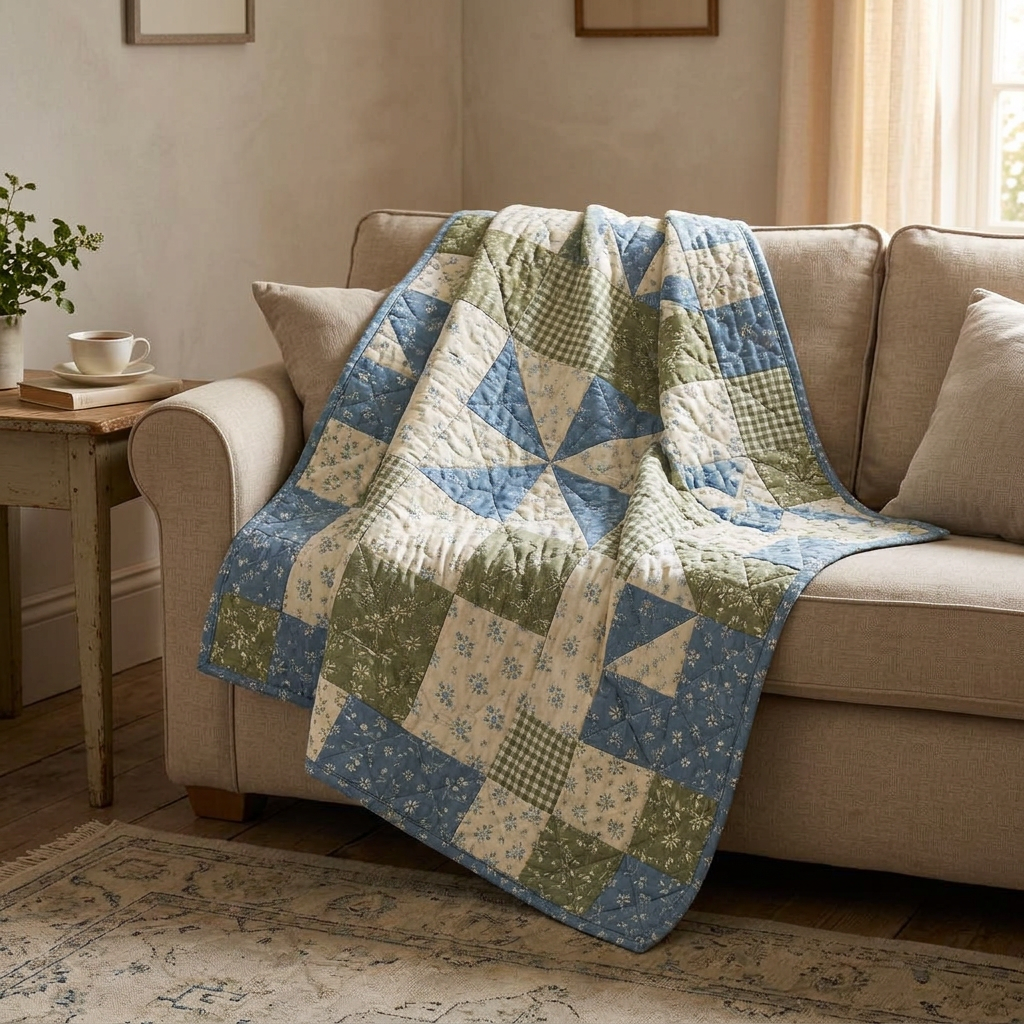
Explore Blue Meadow Quilt Kit, with coordinated fabric for the quilt top and a pattern to guide your making. Check its finished size and included items before choosing.
Explore Blue Meadow Quilt Kit